
The Impact of Artificial Intelligence on Work according to the ADP Research Institute
In the past year, advanced artificial intelligence has burst into society and the workplace, generating diverse opinions about its future impact. According to research from the ADP Research Institute, worker opinions are deeply divided: while some see AI as an opportunity, others fear for the security of their jobs.
What does the data say?
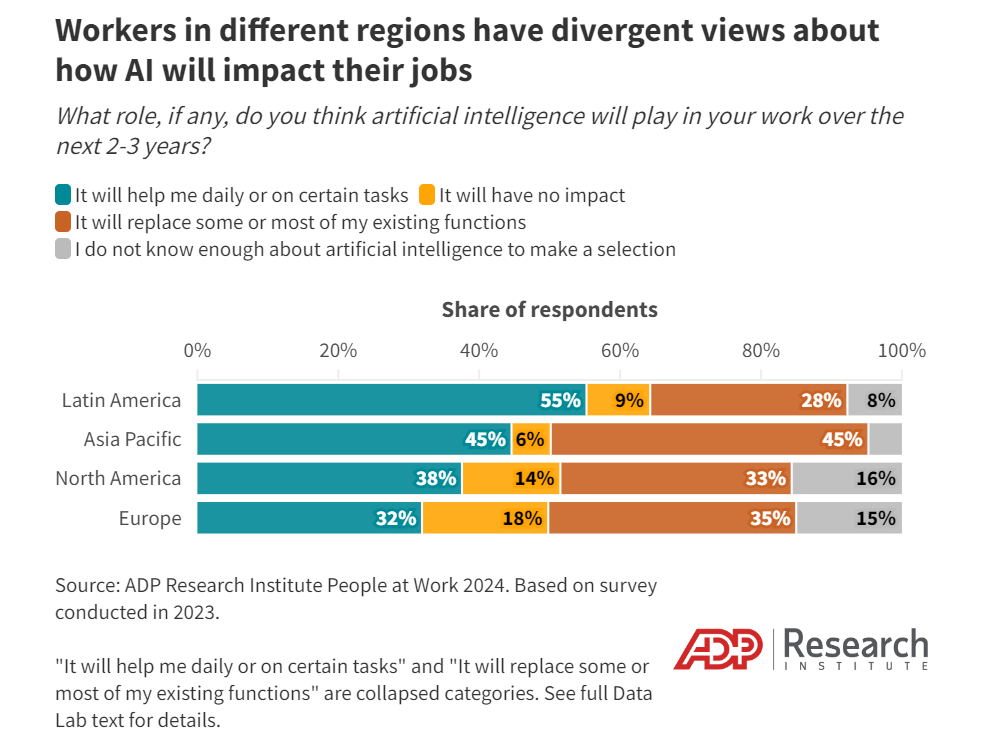
The study surveyed nearly 35,000 private sector workers in 18 countries, revealing that a majority believe AI will affect their jobs in the coming years. However, there is a noticeable split on whether this technology will help them or replace some of their functions.
Key survey results
- Overall impact85%% of workers believe AI will impact their jobs in the next two-to-three years.
- Regional opinions: Workers in Latin America are the most optimistic, thinking AI will help them, while in the Asia-Pacific region and other areas, opinions are more divided.
- Confidence and skillsThose who believe AI will help them tend to be more confident in their abilities and their capacity to advance in their careers.
- Remote workRemote workers are more likely to think AI will replace some of their current job functions.
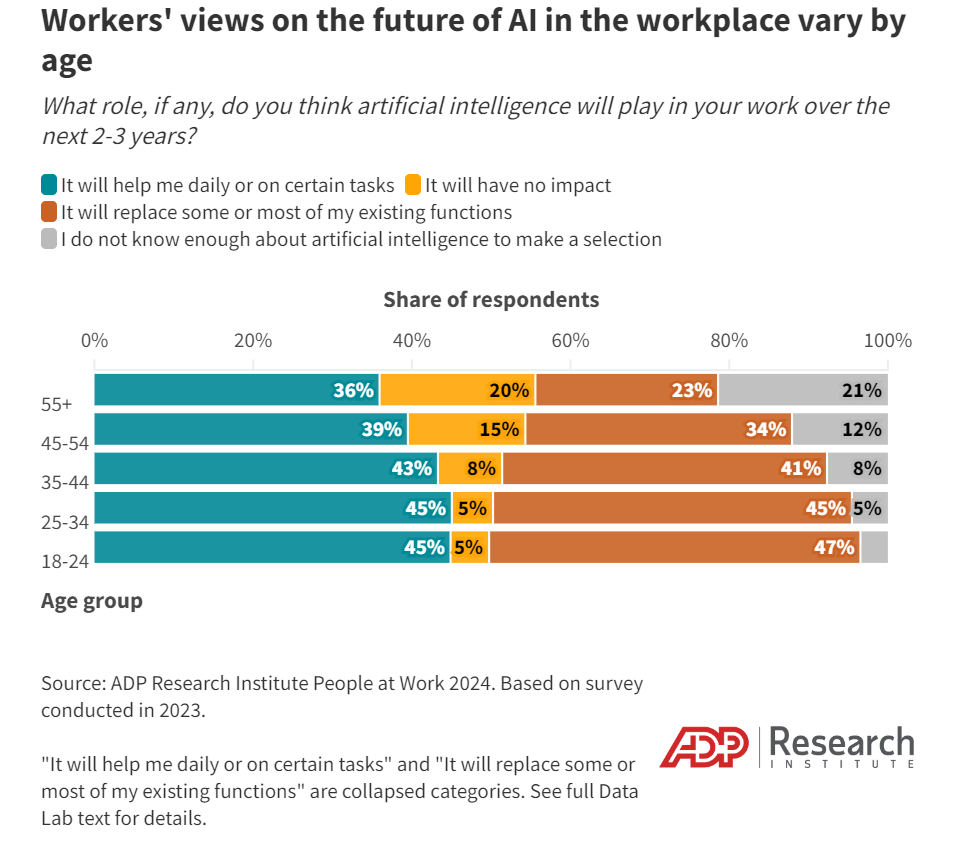
- Generational differencesYounger workers (18-24 years old) are most aware of AI's impact, but are divided on whether it will help or replace them.
Perception based on job type
The use of AI varies depending on the nature of the work. Occupations that rely heavily on computer programming and writing are more susceptible to being affected by generative AI, while jobs requiring critical and scientific thinking are less likely to be altered. This indicates that the technology will not affect all industries equally, and some may see more benefits or challenges than others.
Employer Expectations
Employer adoption of AI has rapidly increased. Between September 2023 and February 2024, the percentage of US companies using AI grew by%. While this growth slowed slightly, it is expected to continue rising. AI is primarily being used to perform tasks previously handled by humans and a significant number of companies are also training their employees to use this technology.
Challenges and opportunities
The perception of AI is characterized by a balance between its capacity to increase productivity and the risk of replacing workers. Economists suggest that the impact of AI on employment will depend on whether the technology complements or substitutes the tasks performed by people. If AI increases productivity, employers will have incentives to hire more workers to increase their income. However, if AI automates tasks, each additional worker becomes less valuable, which could lead to a reduction in hiring.
Conclusion
Artificial intelligence is set to transform the world of work, but its exact impact remains uncertain. In the meantime, it is crucial for both workers and employers to invest in continuous training and skill development to adapt to technological changes and maximize the potential benefits of AI in the future. Adaptation and preparation will be key to capitalizing on the opportunities that this emerging technology offers.
Full note in English https://www.adpri.org/worker-sentiment-ai-impact/
June 10, 2024